

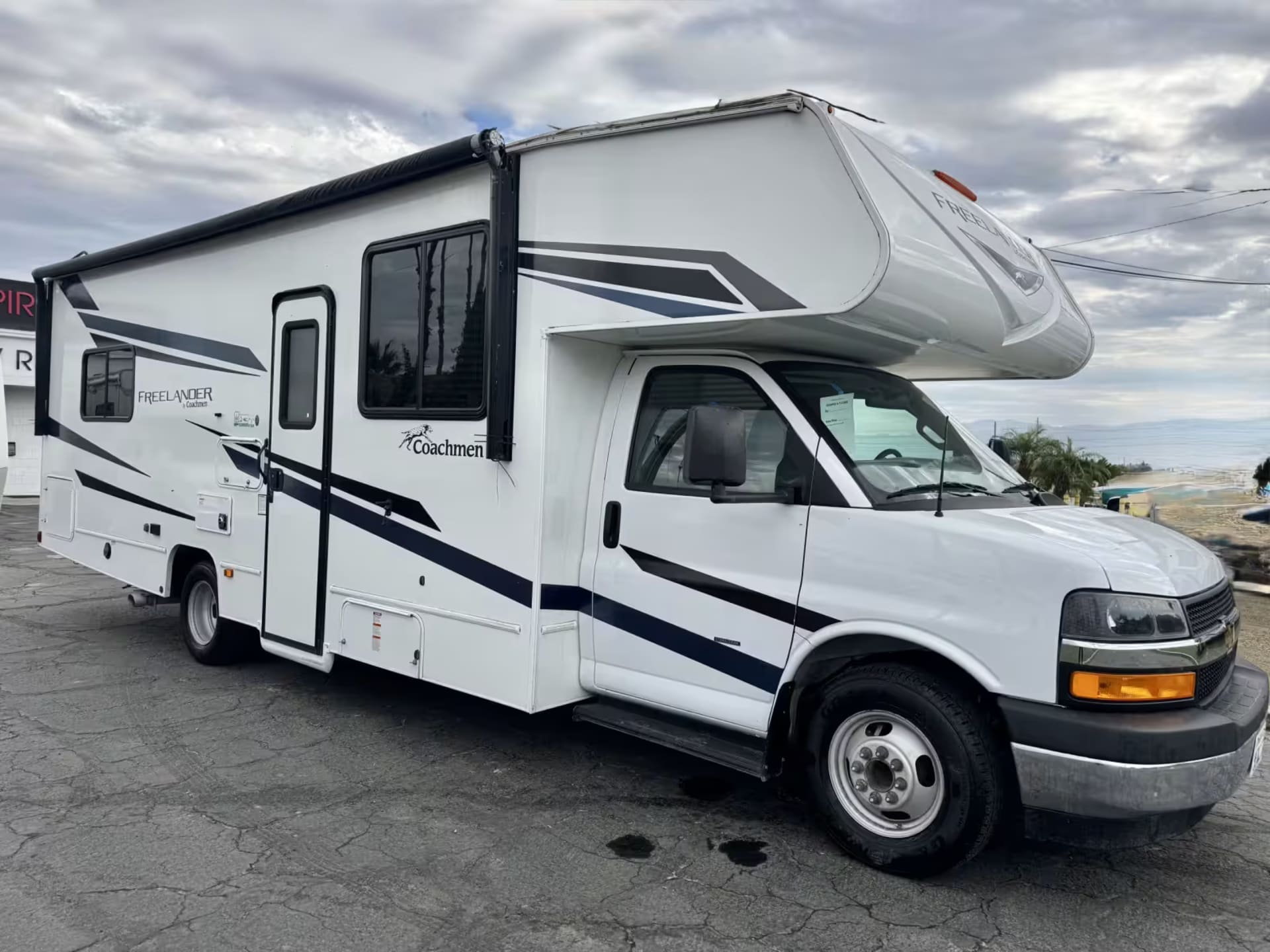
Used Class C Motorhomes for Sale: Buyer’s Guide for Southern California Shoppers
Shopping for used Class C motorhomes for sale can be a smart way to find a comfortable, family-friendly RV without buying a brand-new model. Class C motorhomes are popular because they offer a practical balance of drivability, sleeping capacity, storage, and convenience.
For shoppers throughout the Inland Empire and Southern California, a used Class C motorhome can work well for family road trips, national park vacations, beach camping, mountain getaways, desert weekends, event travel, and extended RV trips. Many buyers choose Class C RVs because they are often easier to drive than larger Class A motorhomes while still offering many of the comforts people expect from a motorized RV.
At Inland Empire RVs, we help shoppers compare available RV inventory and understand what to look for before buying. This guide explains what a Class C motorhome is, who it is best suited for, what to inspect in a used model, and how to choose an RV that fits your budget, travel style, and ownership goals.
Browse RVs for Sale
Contact Inland Empire RVs
Current Used Class C Motorhomes for Sale
[Dynamic Inventory Module: Display available used Class C motorhomes or closely related motorhome listings here.]
Available inventory changes based on trade-ins, consignment listings, sales, condition, seasonality, and market demand. If you do not see the exact Class C motorhome you are looking for, contact Inland Empire RVs to ask about current inventory, upcoming listings, or comparable RV options.
What Is a Class C Motorhome?
A Class C motorhome is a motorized RV built on a truck or van-style chassis. One of the most recognizable features of many Class C RVs is the over-cab sleeping or storage area above the driver’s seat. This design helps maximize interior space while keeping the vehicle more manageable than many larger motorhomes.
Class C motorhomes often include sleeping areas, a kitchen, bathroom, dining space, storage, and living space in one self-contained vehicle. Because they have their own engine, they do not require a separate tow vehicle like a travel trailer or fifth wheel.
Many shoppers compare Class C motorhomes against Class A motorhomes, travel trailers, and camper vans. The right choice depends on your driving comfort, group size, storage needs, budget, and how you plan to travel.
Why Buy a Used Class C Motorhome?
Buying used may allow you to get more space, features, or comfort for your budget compared with buying a brand-new Class C RV. Since new RVs often experience depreciation early in ownership, a well-maintained used Class C motorhome can offer strong value.
A used Class C may also include helpful upgrades already installed, such as:
- Backup cameras
- Solar equipment
- Upgraded batteries
- Improved mattresses
- Suspension upgrades
- Interior storage improvements
- Updated appliances
- Entertainment systems
- Bike racks or exterior storage accessories
For many first-time RV buyers, a used Class C motorhome provides a practical entry point into RV ownership. It offers the convenience of a motorized RV while often feeling more approachable than a larger Class A coach.
Who Should Consider a Class C Motorhome?
Class C motorhomes can work well for families, couples, retirees, road trippers, and first-time RV owners who want a self-contained RV that is easier to manage than some larger motorhomes.
A used Class C motorhome may be a strong fit if you:
- Want a motorized RV with sleeping, kitchen, and bathroom space
- Prefer not to tow a trailer
- Need sleeping capacity for a family or small group
- Want something easier to drive than a larger Class A
- Plan to visit campgrounds, national parks, beaches, mountains, or desert destinations
- Want a flexible RV for weekend trips and longer vacations
- Like the idea of a self-contained travel setup
Class C RVs are especially popular with families because many models provide multiple sleeping areas without requiring an oversized coach.
Class C vs. Class A Motorhomes
One of the most common decisions buyers face is whether to choose a Class C or Class A motorhome.
Class A motorhomes are usually larger and may offer more interior space, larger storage bays, wider living areas, and more residential-style features. They can be a good fit for extended travel, larger groups, or buyers who want maximum comfort.
Class C motorhomes are typically easier for many buyers to drive and park. Their truck-style cab can feel more familiar, and many models are shorter than large Class A coaches. Class C RVs can still offer useful living space, sleeping capacity, kitchens, bathrooms, and storage while being more manageable for first-time owners.
If you are looking for a balance between comfort and drivability, a used Class C motorhome may be the better fit. If maximum interior space is your top priority, you may also want to compare used Class A motorhomes.
Read the Used Motor Homes Buyer’s Guide
Class C vs. Travel Trailers
Class C motorhomes and travel trailers serve different types of buyers.
A Class C motorhome is self-powered, which means the living area and driving area are part of the same vehicle. This can be convenient for road trips, quick stops, and travelers who do not want to tow.
A travel trailer must be pulled by a properly equipped tow vehicle. Once the trailer is parked and disconnected, the tow vehicle can be used separately for local driving. Travel trailers may also offer strong value for buyers who already own a capable truck or SUV.
If you want a motorized RV that can be driven on its own, a Class C may be the better option. If you already have a tow vehicle and want to separate your camping setup from your daily vehicle, a travel trailer may be worth considering.
Read the Used Travel Trailers Buyer’s Guide
Browse Travel Trailers
Choosing the Right Class C Motorhome Size
Class C motorhomes come in different lengths and layouts. A smaller model may be easier to park, drive, and fit into certain campsites, while a larger model may provide more sleeping space, storage, and comfort.
When comparing used Class C motorhomes, consider:
- Number of regular travelers
- Sleeping capacity
- Overall vehicle length
- Bed layout
- Bathroom size
- Kitchen layout
- Dinette and seating space
- Interior storage
- Exterior storage
- Slide-outs
- Generator capacity
- Fuel type
- Driving comfort
- Campground size restrictions
A Class C RV should feel manageable on the road and comfortable at the campsite. Walk through the layout as if you were on an actual trip. Think about where everyone will sleep, how food will be stored, how much gear you need to bring, and whether the bathroom and kitchen are practical for your group.
Common Class C Motorhome Floorplans
Class C motorhomes are available in several common layouts. Understanding these options can help you narrow your search.
Over-Cab Sleeping Layouts
Many Class C motorhomes include a bed or storage area above the cab. This is one of the features that makes Class C RVs popular with families because it adds sleeping capacity without requiring a much longer vehicle.
Rear Bedroom Layouts
Some Class C motorhomes include a rear bedroom with a queen bed, corner bed, or twin-bed setup. A dedicated rear sleeping area can provide more privacy and comfort during longer trips.
Bunkhouse Class C Motorhomes
Bunkhouse models are useful for families or groups that need extra sleeping space. These layouts may include bunk beds, convertible dinettes, sofas, and over-cab sleeping areas.
Slide-Out Models
Some Class C RVs include slide-outs that expand the living area when parked. Slide-outs can make the RV feel more spacious, but buyers should inspect them carefully for proper operation and signs of leaks.
Compact Class C Motorhomes
Smaller Class C models can be easier to drive and park. They may be a good fit for couples, solo travelers, or buyers who plan to visit campgrounds with tighter space limits.
What to Inspect Before Buying a Used Class C Motorhome
A careful inspection is one of the most important steps when buying a used Class C motorhome. Because Class C RVs include both vehicle systems and house systems, buyers should evaluate the engine, drivetrain, living area, appliances, roof, plumbing, electrical system, and overall structure.
Water intrusion is one of the biggest concerns in used RVs. Start by inspecting the roof, seams, windows, vents, slide-outs, cab-over area, and exterior seals. The over-cab section is especially important because leaks in that area can lead to costly damage if they are not addressed.
Look for stains, soft flooring, bubbling walls, musty odors, discoloration, sagging panels, or signs of previous repairs.
You should also inspect:
- Roof membrane and sealant
- Cab-over area
- Sidewalls and exterior seams
- Windows and doors
- Tires and date codes
- Brakes
- Suspension
- Engine condition
- Transmission performance
- Mileage
- Generator hours
- Batteries
- Plumbing
- Water heater
- Refrigerator
- Stove and oven
- Air conditioning
- Heating
- Electrical system
- Slide-outs
- Awning
- Interior flooring
- Upholstery and cabinetry
Test major systems whenever possible. A used Class C motorhome may look clean but still need work on appliances, plumbing, electrical components, roof seals, tires, brakes, or engine-related systems.
Used Class C Motorhome Inspection Checklist
Before making a purchase, confirm that the motorhome is structurally sound and that its major systems operate correctly.
A useful inspection should cover five areas:
Vehicle and Drivetrain
Review the engine, transmission, brakes, steering, suspension, fluids, belts, hoses, warning lights, mileage, maintenance history, and road performance. A test drive can help reveal handling, braking, alignment, noise, and drivability concerns.
Roof, Seals, and Exterior
Inspect the roof, cab-over area, windows, doors, vents, seams, storage compartments, exterior panels, awning, and slide-outs. Look for cracks, separation, stains, moisture, rust, bubbling, and previous repairs.
Tires and Safety Equipment
Check tire age, tread depth, sidewall condition, spare tire availability, lights, mirrors, seat belts, smoke detector, carbon monoxide detector, propane detector, and fire extinguisher.
Interior and Appliances
Test the refrigerator, stove, oven, microwave, air conditioner, heater, water pump, water heater, lights, outlets, fans, entertainment equipment, and furniture.
Plumbing and Electrical Systems
Run water through the sinks, shower, and toilet. Check for leaks under cabinets and around the water heater. Test shore power, house batteries, converter operation, generator output, and any installed solar components.
If you are not experienced with RV inspections, consider having the motorhome reviewed by a qualified RV technician or mechanic before purchase.
Mileage and Generator Hours
Mileage matters when shopping for a used Class C motorhome, but it should not be the only factor. A low-mileage RV that has been sitting unused for years may still need tires, batteries, seals, fluids, brake service, or appliance repairs. A higher-mileage RV with regular maintenance may be in better practical condition than a neglected low-mileage unit.
Generator hours should also be reviewed. A generator that has been exercised regularly may be healthier than one that has sat unused for long periods. Ask whether the generator starts easily, runs under load, and has documented service history.
When comparing used Class C motorhomes, look at the full picture: mileage, maintenance records, storage conditions, roof care, tire age, generator use, and overall condition.
Questions to Ask Before Buying a Used Class C Motorhome
Ask the seller or dealer questions that help clarify the RV’s condition, history, and ownership costs.
Helpful questions include:
- How long has the motorhome been owned?
- Why is it being sold?
- Has it ever had water damage?
- Has the roof been inspected or resealed?
- Are service records available?
- How old are the tires?
- How many miles are on the engine?
- How many hours are on the generator?
- Do all appliances work?
- Has the RV been stored indoors, covered, or outside?
- Have there been any major repairs?
- Are there known mechanical issues?
- Are there known house-system issues?
- Is the title clear?
- What accessories are included?
These answers can help you understand whether the asking price reflects the RV’s actual condition.
New vs. Used Class C Motorhomes
A new Class C motorhome may include current design features, manufacturer warranty coverage, and the ability to choose a specific model, floorplan, or option package. However, a used Class C motorhome may provide more space, better features, or stronger overall value for the same budget.
Used models may already include helpful upgrades and accessories. At the same time, they require careful inspection because maintenance history, storage conditions, roof care, and mechanical upkeep can affect long-term reliability.
The better choice depends on your budget, desired features, willingness to perform maintenance, and how often you plan to use the motorhome.
Class C Motorhome Ownership Costs
The purchase price is only one part of Class C motorhome ownership. Buyers should also plan for:
- Registration
- Insurance
- Storage
- Maintenance
- Tires
- Oil changes
- Brake service
- Generator service
- Roof resealing
- Batteries
- Propane
- Fuel
- Campground fees
- Appliance repairs
- Engine and drivetrain repairs
Storage can be an important factor for buyers who live in communities with parking restrictions or limited driveway space. Before buying, make sure you have a practical place to keep the motorhome when it is not being used.
Buying a Used Class C Motorhome in Southern California
Southern California offers year-round opportunities for Class C motorhome owners. Inland Empire buyers can easily reach mountains, beaches, deserts, national parks, and event destinations from communities such as Colton, Riverside, San Bernardino, Redlands, Fontana, Ontario, Rancho Cucamonga, Moreno Valley, Lake Elsinore, Menifee, Hemet, Chino, Jurupa Valley, and Los Angeles.
A buyer planning frequent national park trips may prioritize a shorter, easier-to-park Class C. A family planning beach camping or campground stays may focus more on sleeping capacity, storage, bathroom layout, and kitchen space. Someone planning desert weekends may care more about generator capacity, air conditioning, storage, and holding tank capacity.
Your expected destinations should influence the size, layout, and systems you choose.
Should You Rent a Class C Before Buying?
Renting before buying can help you learn which features matter most. A short trip may reveal whether a particular Class C size feels manageable, whether the sleeping layout works for your family, and whether you are comfortable driving a motorized RV.
You may also discover that you need more storage, a different bathroom layout, a larger refrigerator, or a separate sleeping area.
The rental category page serves travelers looking to rent, while this guide supports shoppers looking to purchase a used Class C motorhome.
Browse Used Class C Motorhomes and RVs for Sale
If you are searching for used Class C motorhomes for sale in the Inland Empire or Southern California, Inland Empire RVs can help you compare available inventory and understand which RV may fit your budget, travel plans, and ownership goals.
Inventory changes frequently, so review current listings or contact our team if you are looking for a specific size, floorplan, brand, mileage range, or feature.
Browse RVs for Sale
Contact Inland Empire RVs
Frequently Asked Questions About Used Class C Motorhomes for Sale
Is buying a used Class C motorhome worth it?
A used Class C motorhome can be worth buying when it is in good condition, fits your travel needs, and has been properly maintained. Buying used may allow shoppers to get more space, features, or equipment for their budget compared with purchasing a new motorhome.
What should I inspect before buying a used Class C motorhome?
Inspect the roof, cab-over area, seals, windows, sidewalls, tires, brakes, engine, transmission, generator, batteries, plumbing, electrical system, appliances, air conditioning, heating, slide-outs, awning, and signs of water damage.
How many miles is too many for a used Class C motorhome?
Mileage should be evaluated alongside maintenance history, storage conditions, tire age, engine condition, generator hours, and overall care. A well-maintained higher-mileage RV may be a better choice than a low-mileage RV that has been neglected.
Are Class C motorhomes good for families?
Yes. Class C motorhomes are popular with families because many models include multiple sleeping areas, kitchen space, bathroom access, storage, and a more manageable driving experience than larger motorhomes.
What is the difference between a Class C motorhome and a Class A motorhome?
A Class C motorhome is usually built on a truck or van-style chassis and often includes an over-cab sleeping or storage area. A Class A motorhome is typically larger and built with a bus-style body. Class C RVs are often easier for first-time buyers to drive, while Class A RVs may offer more interior space.
Should I rent a Class C motorhome before buying one?
Renting before buying can be helpful, especially for first-time RV buyers. It gives you a chance to test driving comfort, sleeping arrangements, storage, campground setup, and the overall RV experience before making a purchase.
Where can I buy a used Class C motorhome in the Inland Empire?
Inland Empire RVs helps shoppers throughout Colton, Riverside, San Bernardino, Redlands, Moreno Valley, Lake Elsinore, Jurupa Valley, Fontana, Ontario, Los Angeles, and nearby Southern California communities compare available RV inventory.
Can Inland Empire RVs help me sell or consign my current motorhome?
Yes. Inland Empire RVs offers options for RV owners who want to sell or consign an RV.